8 Best Imagine.art Alternatives for uncensored video generator in 2026
If you want a full uncensored video generator for fast visual experiments, ImagineArt is a reasonable place to start. It can cover several creative jobs in one workspace. Once you need deeper edits, steadier output, a personal scene that matches the picture in your head, or tighter control, that workflow starts to feel thin. Creators who specifically need uncensored AI video to video usually hit that wall first, because a general art suite is not built to restyle a real clip and keep the subject intact.
In this article I tested eight ImagineArt alternatives and looked at which ones produce footage you can actually use, not just a pretty still. I paid extra attention to uncensored AI video to video workflows.
Best Imagine.art Alternatives in 2026
Senzia is the strongest ImagineArt alternative I tested for people who want an uncensored video generator that also finishes the job. It is built for creators exploring NSFW AI images and video, and it balances generation, edit depth, and day-to-day workflow. You already have the idea. The tool should not bury it under extra apps. For clip-based work, its uncensored AI video to video path and its uncensored video to video generator sit in the same account as image generation, face swap, and video extension.
Recraft is the one I would open for editable vectors and brand assets. Mage Space fits creators who want many models, including a more open uncensored video to video AI style of experimentation. Fotor AI is the fast edit-and-export option. Leonardo AI is stronger for concept art. SeaArt is an anime and stylized character pick. GoEnhance AI is the specialist for a restyle AI video uncensored look on existing footage. NightCafe is the community art sandbox when you are still exploring, not shipping a video to video AI uncensored deliverable.
8 Best Imagine.art Alternatives At a Glance
|
Tool |
Best For |
Why Choose It |
|
Senzia |
All-in-one uncensored video workflows |
uncensored AI video to video, multiple models, and credit-based pricing |
|
Recraft |
Editable vector and brand design |
Native SVG, brand colors, and commercial design assets |
|
Mage Space |
Flexible uncensored image and video |
Multiple models, LoRA, character training, and motion control |
|
Fotor AI |
Quick edits and everyday visuals |
Generate, then retouch, enhance, or remove a background in one editor |
|
Leonardo AI |
Concept art and stylized worlds |
Strong fantasy, game, and cinematic concept frames |
|
SeaArt |
Anime and stylized characters |
Character art plus a community gallery for prompt ideas |
|
GoEnhance AI |
Video transformation and anime styles |
Anime effects, video transformation, and face swap |
|
NightCafe |
Community art experiments |
Multi-model image creation with daily credits |
Why Look For An Imagine.art Alternative?
ImagineArt’s strength is obvious. It gives you a broad creative toolkit, so you can try more than one image mode without hopping between sites.
The limit shows up as soon as the job is no longer a quick experiment. When the tool has to follow a detailed prompt, hold a character’s identity, or hand you a usable result without a pile of retries, the workflow is less predictable. On Reddit, users describe uneven output quality, complex prompts that are only partly followed, credits spent on every revision, and pricing that is hard to estimate before you generate. A multi-model lobby solves the "where do I start" problem. People stay only if quality, control, and cost hold up on the actual task.
That is why I looked for ImagineArt alternatives with clearer control, more reliable output, and a shorter path from prompt to finished visual. For video, that path is often an uncensored reference to video job: you already have a clip, and you need a new version that keeps motion or identity. ImagineArt is more comfortable as an image studio than as an uncensored AI video to video generator.
Senzia is the best Imagine.art alternative because it offers much more than just uncensored video generation. Senzia is an AI generation platform focused on the NSFW niche, designed specifically for personalized content creation. It integrates a wide range of features, including Text-to-NSFW Video, Image-to-NSFW Video, uncensored AI Video-to-Video, AI Video Extender, AI Motion Control, and AI Face Swap. Instead of switching between multiple tools for different creative tasks, users can access these capabilities through a streamlined online workflow, making Senzia a practical alternative for creating NSFW AI images and videos.
Senzia — Best All-in-One uncensored video generator
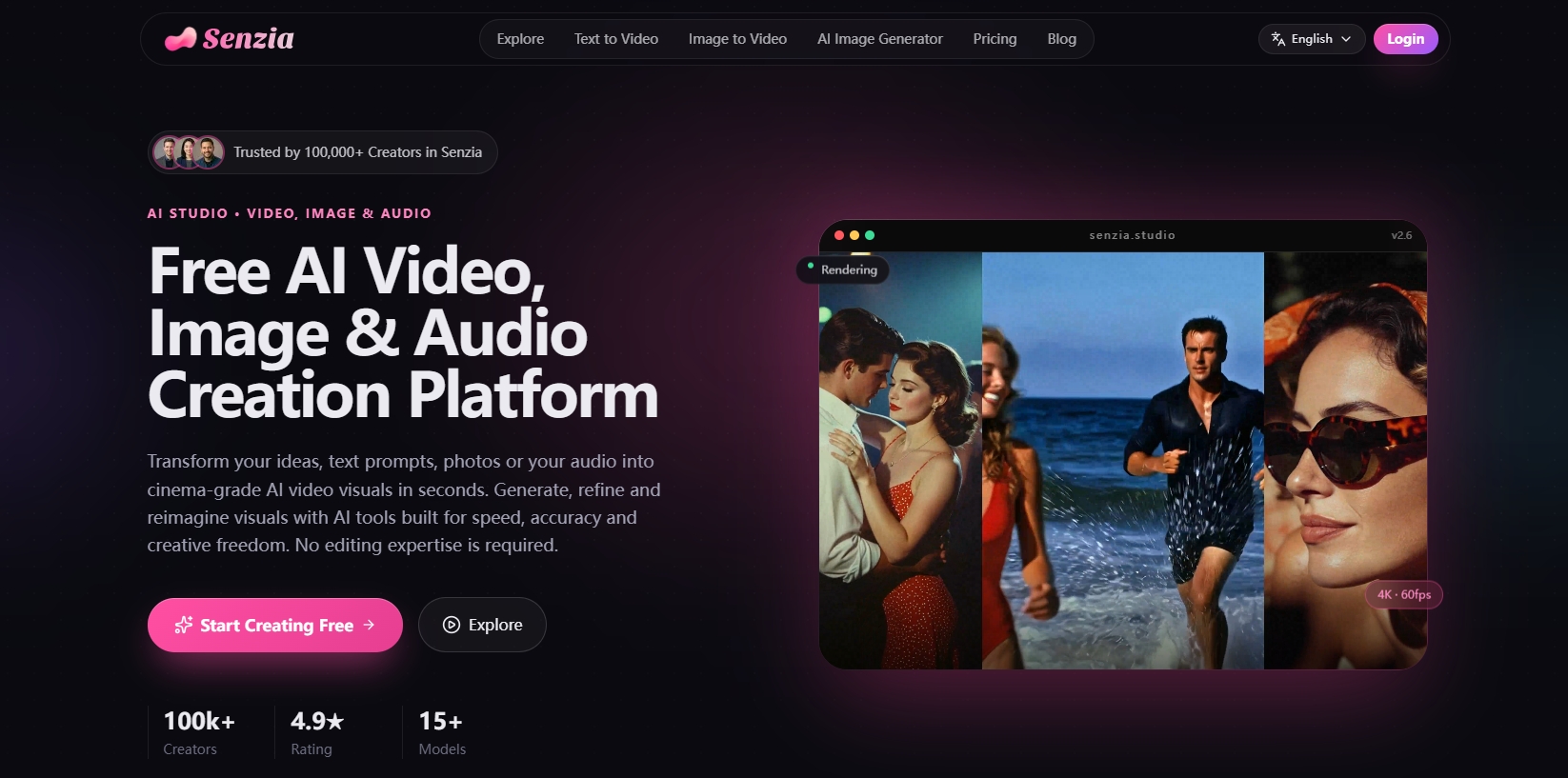
Senzia is an all-in-one platform for AI image and video generation. It offers a range of features, including Image-to-Video, AI Motion Control, and AI Face Swap. One of Senzia's standout features is its uncensored AI video to video capability. Simply upload a source video and describe the changes you want to make to generate a new clip. This uncensored video to video generator is particularly useful when your source footage already contains the desired performance, camera movements, or product demonstrations. In addition to its general-purpose video-to-video tool, Senzia also offers a dedicated page for video to video AI uncensored, making it especially convenient for these types of creative tasks.
The uncensored reference to video feature allows users to guide generated content using a reference video, particularly for poses, camera movements, and actions. It takes this a step further by using the reference video to guide the movements while preserving the character from the uploaded source image. The platform also supports restyle AI video uncensored, which changes the visual style while preserving the original movements. For example, live-action footage can be transformed into animation, illustration, or commercial advertising styles. Of course, the results of uncensored reference video to video are only worth keeping when the original subject remains clearly recognizable after the style transformation.
I also find Senzia's privacy policy and pricing structure relatively user-friendly, aligning with what I expect from an uncensored AI video to video generator. Users can access the platform without providing personal information, and generated content remains private by default. Senzia uses a credit-based payment system rather than a subscription model. New users receive free credits upon registration, and there are several other ways to earn additional free credits. With one-time purchases and reasonable per-generation costs, the $9.90 package offers enough credits for up to 20 video generations.
You can start with an idea, a script, a static image, or an existing video clip and turn it into a video that's close to publication-ready quality. There's no need to switch between three separate products for video generation, face matching, and background music.
Pros
-
Multiple models in one place: Video and image models share a single workflow, so you don't need to export a clip just to restyle it elsewhere.
-
Uncensored generation: Image styles and video tools are available without a traditional content-detection layer blocking the process, making Senzia a practical uncensored AI video to video generator.
-
Flexible pricing: Free credits and one-time purchase packages are available, with no required subscription.
-
Privacy by default: No personal information is required, and generated content remains private.
Cons
-
Not designed for long-form storytelling: If your main goal is to create a 30-minute animated episode with automatic scene planning, a dedicated long-form storytelling tool may be a better fit.
-
Restyling may require multiple attempts: Source footage that is shaky or poorly lit may need more than one generation pass to achieve satisfactory results.
Best For
Senzia fits creators and marketers who want ideas, scripts, products, images, and existing clips turned into finished AI content. It is the ImagineArt alternative I would pick first when the brief is an uncensored video to video AI deliverable rather than a single concept frame.
Website: uncensored video generator
Recraft — Best for Editable Vector and Brand Design
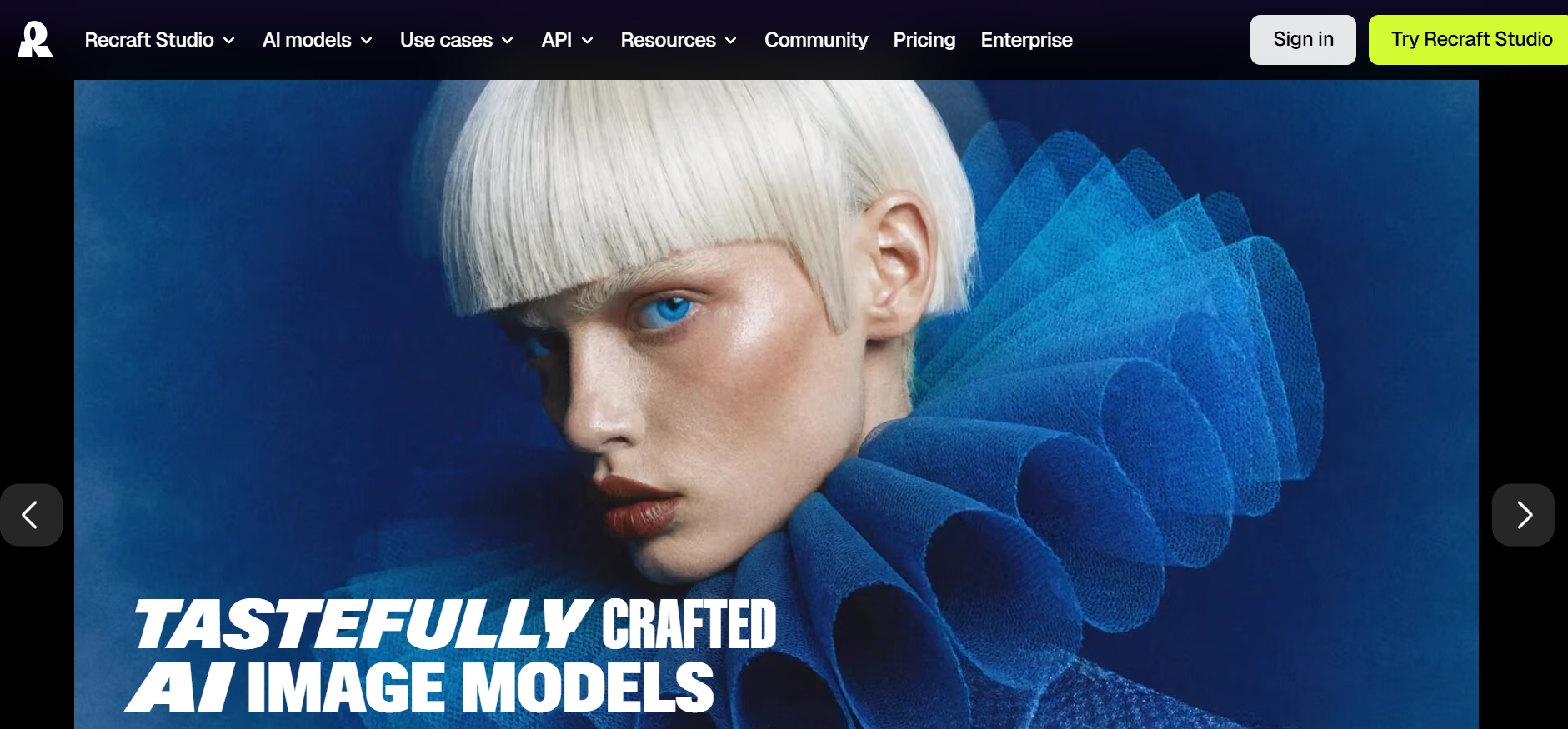
Recraft is a strong option when you need AI visuals for professional design and commercial projects. Unlike general image generators that lean artistic, Recraft puts weight on editable vectors, brand consistency, and practical design. Native SVG generation is useful for logos, icons, illustrations, posters, and UI assets. You can set styles and colors and keep one visual identity across a campaign.
Unlike ImagineArt, which is easier to treat as a broad generation lobby, Recraft is a design tool. It is not the place I would run a reference-driven video job. I still keep it on the list because many ImagineArt users are really trying to ship brand assets, not footage.
It does care about how things look, but editability comes first. The workflow includes generation, inpainting, background removal, upscaling, and mockups, which covers a lot of branding and marketing work. Photorealistic images are not its strongest suit compared with tools built for that.
Pros
-
Native SVG generation: Create editable logos, icons, and UI assets that can be further customized.
-
Strong text rendering: Well-suited for posters, advertisements, and other marketing visuals that incorporate text.
-
Versatile commercial applications: Supports brand design, e-commerce visuals, marketing materials, and UI assets.
Cons
-
Less competitive photorealistic generation: Results may be less convincing when generating complex or highly realistic images.
-
Learning curve: Vector editing and style management take time to master, especially for users without prior design experience.
-
No built-in video generation: Recraft cannot replace a dedicated video tool. Turning generated still images into videos requires an additional platform.
Best For
Graphic designers, brand teams, marketers, e-commerce brands, and UI/UX designers who need editable vectors, consistent brand visuals, and AI design assets for paid work.
Website: uncensored video generator with Recraft
Mage Space — Best Online Uncensored AI Generator for Creative Flexibility
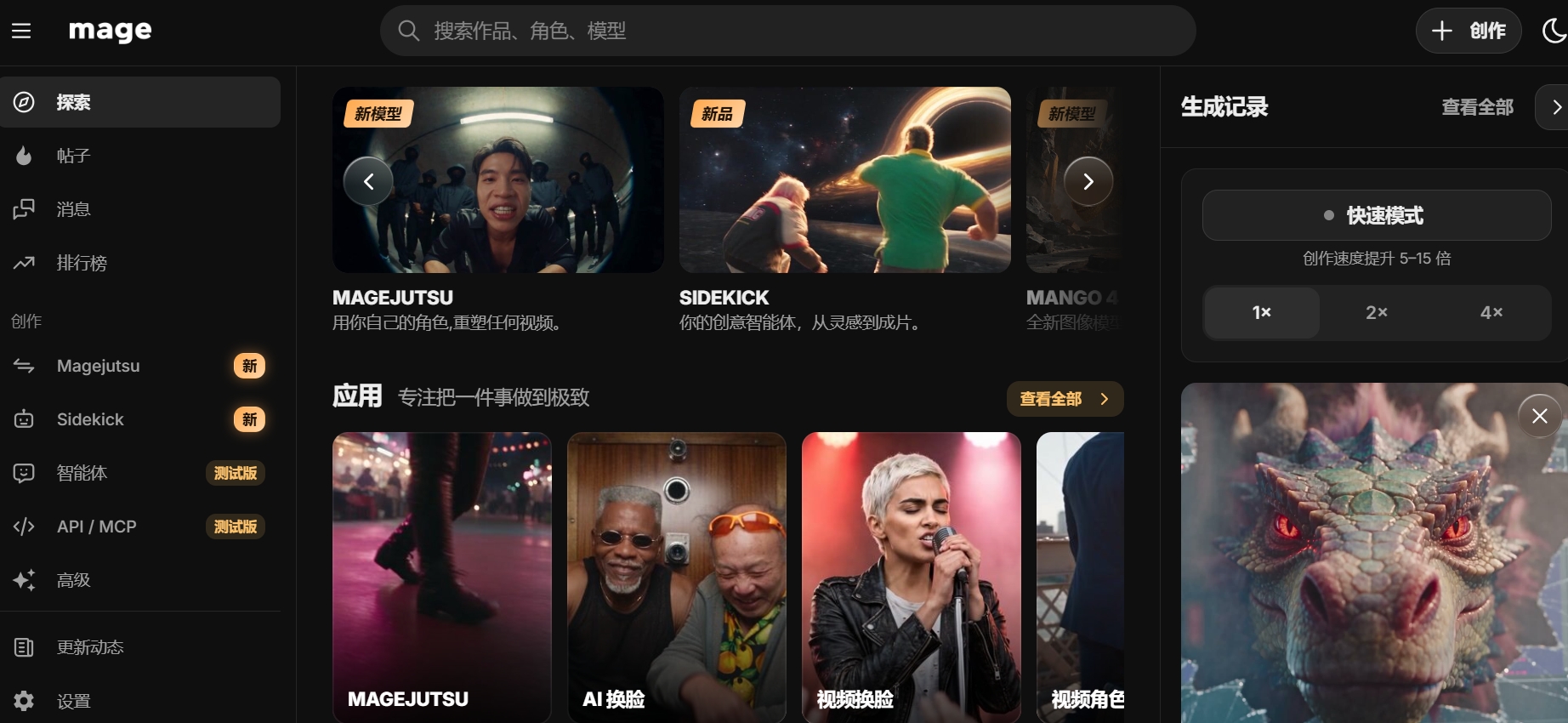
Mage Space is a good option if you want a flexible platform for uncensored, high-volume image and video generation. It is not a single-task app. It brings in multiple models, including Stable Diffusion, Flux, and Wan, so you can move across styles. Image and video both exist here, which helps with digital art, character design, and social assets. LoRA, ControlNet, character training, and inpainting give you more than a prompt box.
Unlike ImagineArt, Mage Space is more explicit about model choice and adult-leaning creative range. It can support an uncensored video to video AI experiment, but I would not call it the cleanest uncensored AI video to video product. The controls are deep, and the interface assumes you want that depth.
It aims for control as well as variety. Character consistency and Motion Control help, and Motion Control can transfer movement from a reference video. That is the closest Mage Space gets to an uncensored reference to video workflow. Unlimited generation on eligible models and settings helps people who create often. Premium models and features can still ask for extra Gems or a higher plan, and beginners need time before the customization stops feeling crowded.
Pros
-
Multiple models in one place: Access various image and video models without creating separate accounts for different tools.
-
Advanced customization: Supports LoRA, ControlNet, character training, and inpainting for greater control over generated outputs.
-
Flexible image and video workflows: Combines image generation, video creation, character consistency, and Motion Control, making it useful for more versatile uncensored reference video to video experiments.
Cons
-
Additional costs for premium features: Some premium models and features require extra Gems, meaning frequent usage can cost more than the subscription price initially suggests.
-
Subscription-dependent access: Available models, settings, and customization options vary depending on the subscription tier.
-
Less streamlined video restyling: Video restyling is supported, but the workflow is not as straightforward as using a dedicated video-to-video page.
Best For
AI artists, digital creators, video creators, and experienced users who want many models, advanced customization, and room to explore images and video in one login.
Website: uncensored video generator with Mage Space
Fotor AI — Best ImagineArt Alternative for Fast Edits and Everyday Visuals
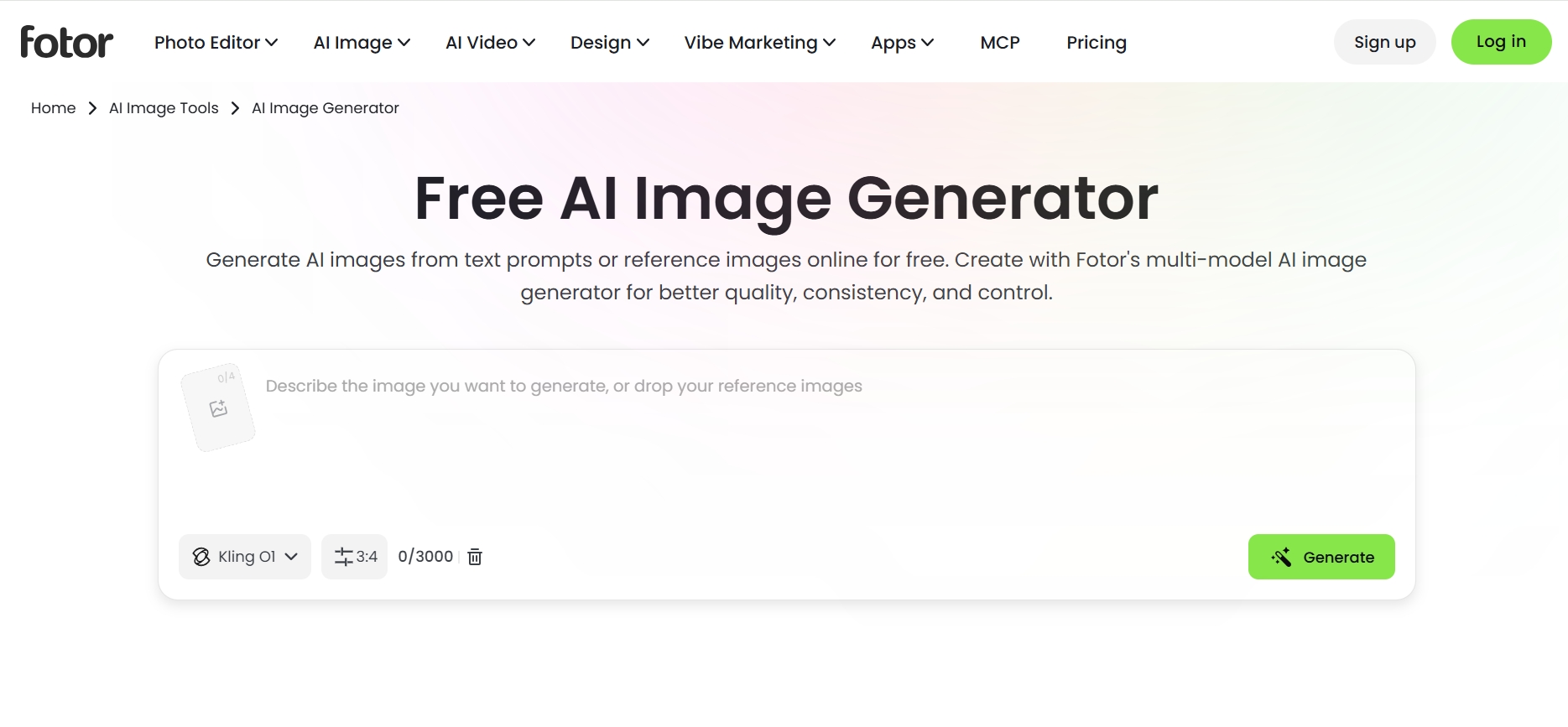
Fotor is the alternative I would hand to someone who wants AI generation beside a photo editor they already understand. It behaves like a visual workspace, not a deep AI art lab. I liked it for portraits, social images, and simple promo graphics. When speed matters more than a precise artistic plan, I can generate and then retouch without changing rooms. Editing is the reason I opened Fotor. After a generation or an upload, I can retouch, enhance, or remove a background on the spot.
Unlike ImagineArt, Fotor is happier as an editor than as a model playground. It is not an uncensored video to video generator. If the real task is a video to video AI uncensored file, I would generate or restyle elsewhere and use Fotor only on the stills around that video.
When the AI result misses the brief, the editor can only patch so much. Complex layouts, exact object placement, or a set of style-matched variants still take more prompting and cleanup than a quick social post.
Pros
-
Familiar editing experience: Easy to use if you're already familiar with photo-editing software.
-
Useful retouching tools: Offers convenient retouching, image enhancement, and background editing tools for both AI-generated images and uploaded photos.
-
Suitable for everyday visuals: Works well for portraits and general-purpose visual content without requiring a complicated workflow.
Cons
-
Prompt refinement required: Achieving a specific visual result may take several rounds of prompt adjustments.
-
Limited model selection: Offers fewer AI models, resulting in a narrower range of visual styles and capabilities.
-
Limited reference-video capabilities: Not ideal for workflows that rely on reference clips, as Fotor cannot transfer motion from a sample video.
Best For
Independent creators, small-business owners, bloggers, and beginners who need an easy-to-use platform for creating social media visuals, designing promotional materials, generating simple graphics, and retouching everyday photos. It is particularly suitable for users who prefer a straightforward, editing-focused workflow without having to learn complex design software.
Website: uncensored video generator with Fotor AI
Leonardo AI — Best ImagineArt Alternative for Concept Art
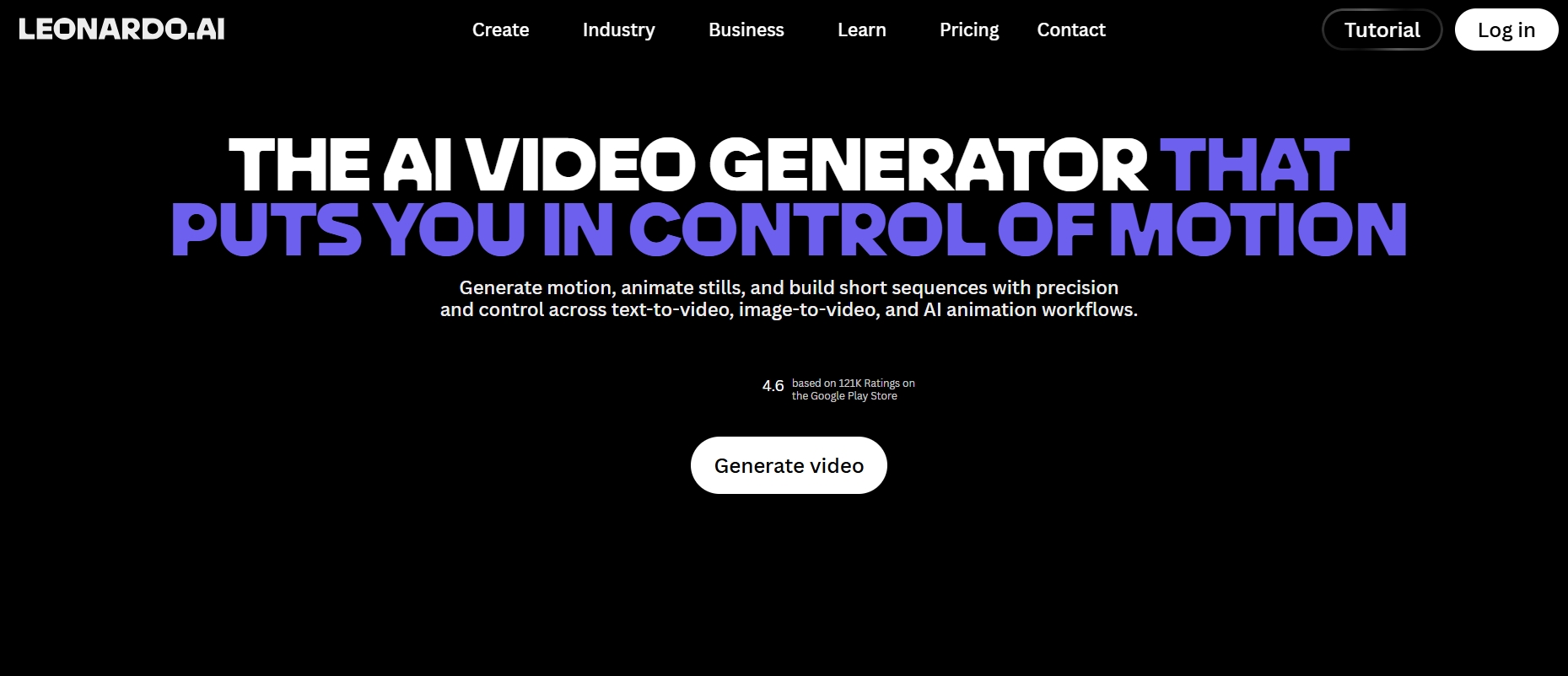
Leonardo AI suits creators who care about art direction, worldbuilding, and polished concept frames. Compared with a simple prompt box, the workspace is more deliberate.
I got reliable results for fantasy art, game-style characters, environments, and cinematic concepts. When I need a moodboard or a first visual direction, Leonardo gives me frames I can actually discuss. Variation controls help me push a character, compare styles, or sketch early visuals for a game, a story, or a pitch. That control also raises the learning cost. Switching models, tuning settings, and watching token use can slow a small project, and some strong ideas still need another tool before they are final.
Unlike ImagineArt, Leonardo is better when the output should look like concept art rather than a quick social visual. It is still primarily a stills studio. I would not use it as my uncensored video to video AI engine. A concept frame from Leonardo can become the input for an uncensored AI video to video step on a platform that actually edits footage. If I need an uncensored reference to video move, Leonardo is the design reference, not the render.
Pros
-
Strong concept frames for fantasy, game, and stylized visual projects.
-
Style controls that help creators establish a clearer visual direction.
-
Flexible iteration for developing scenes, characters, and entire worlds.
Cons
-
The wide range of models and settings can take time to learn.
-
Experimenting with multiple variations can consume tokens faster than expected.
-
Concept frames often require another tool for final polishing, especially when creating a restyle AI video uncensored treatment of a moving shot.
Best For
Game creators who want to develop characters, worlds, and props for their projects. It is also suitable for artists exploring polished fantasy, cinematic, or stylized visuals, designers who need to experiment with concepts during presentations, and writers who want to visualize scenes and character appearances.
Website: uncensored video generator with Leonardo AI
SeaArt — Best ImagineArt Alternative for Anime and Stylized AI Images
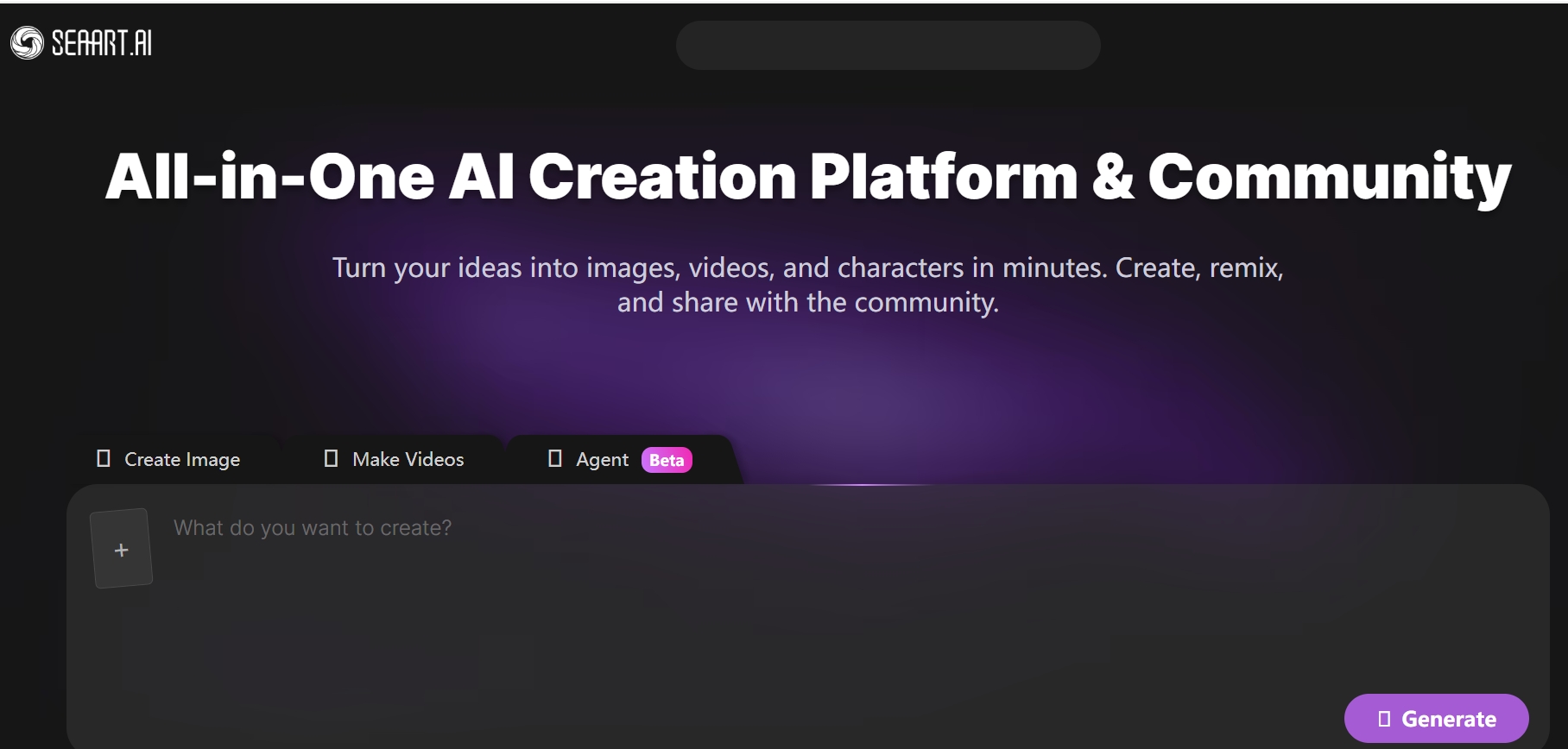
When I want anime art, character concepts, or ideas pulled from a visual community, SeaArt is a natural stop. It leans expressive rather than commercial product design.
Character work was the best part in my tests. It is a good fit for cartoon characters, fantasy scenes, dramatic portraits, and other concepts that need a clear style. The community gallery is the other useful piece. Other people’s posts show how a prompt, a taste, and a character idea turn into an image.
The community feed can feel noisy once I already know the target. Heavy stylization sometimes drifts off the prompt, and the same character can shift in small ways across variants.
Unlike ImagineArt, SeaArt is more of an anime workshop than a general office suite. It is not where I would finish an uncensored reference video to video delivery. I use SeaArt to lock a character's look, then move that look into a video to video AI uncensored tool if the character has to walk, turn, or speak.
Pros
-
Strong anime and stylized character generation: Particularly good at creating anime characters, expressive portraits, and visually distinctive illustrations.
-
Active creative community: Community posts provide inspiration, prompt ideas, and style references that help users explore different creative directions.
-
Comprehensive creative toolkit: Offers a broader set of features than a basic text-to-image generator, giving users more ways to experiment with AI-generated art.
Cons
-
Limited commercial applications: Not the best choice for polished commercial product photography or professional brand assets.
-
Style refinement required: Heavily stylized generations may need additional editing or correction to achieve the desired result.
-
Busy interface: The interface can feel overwhelming for users who simply want to generate a single image quickly.
-
Limited video capabilities: Video generation is not its primary focus. Users who need video transformation workflows will still need a dedicated tool, such as an uncensored video to video generator.
Best For
creators who enjoy producing anime characters, expressive portraits, dramatic fantasy scenes, and stylized character artwork. It is also a good choice for fan creators and hobbyists who like exploring community-generated content, sharing prompts, remixing artwork, and experimenting with different visual styles.
Website: uncensored video generator with SeaArt
GoEnhance AI — Best for Video Transformation and Anime-Style Videos
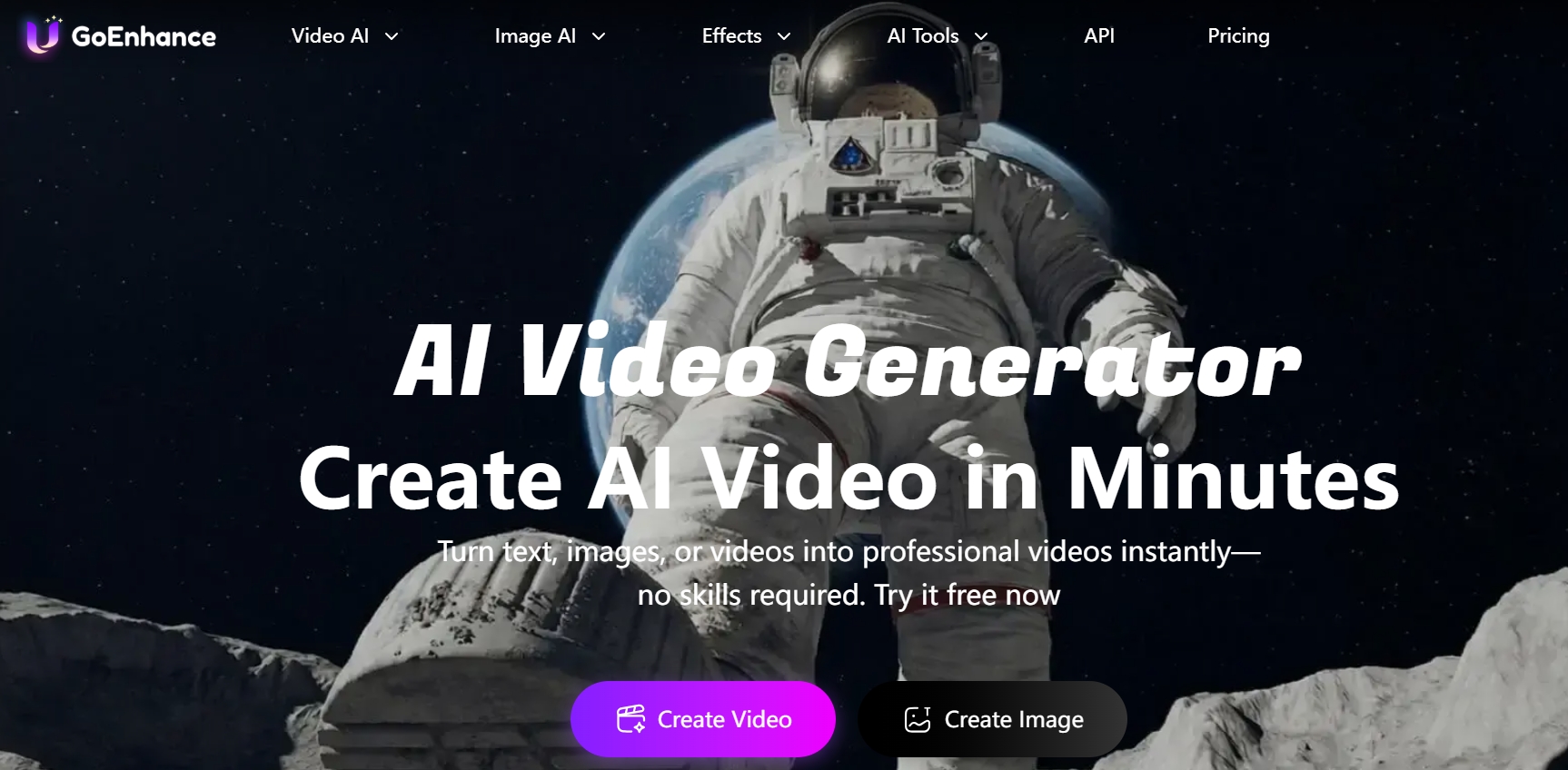
GoEnhance AI is a strong option if you want existing footage turned into stylized AI video. Its image-based creation is another way into that look. The video-to-video feature is the useful part: ordinary footage becomes anime, cartoon, or another art style.
Unlike ImagineArt, which spreads itself across a wide creative set, GoEnhance puts weight on video generation and style transfer. You can restyle footage or build a short clip from an image or text. Quality still moves around. Some users report shaky motion, soft detail, and inconsistent takes. Tokens add up when you regenerate, and thin post-production means an external editor for trims and merges.
I would test GoEnhance when the only brief is a stylized transformation. I would move back to Senzia when the same project also needs an uncensored reference to video lock, face consistency, music, or a longer extent. GoEnhance can attempt an uncensored reference video to video style transfer, but the surrounding workflow is narrower.
Pros
-
Wide range of creative tools: Offers Text-to-Video, Image-to-Video, Video-to-Video, image generation, face swap, and lip sync in one platform.
-
Strong video-to-video capabilities: Particularly useful for transforming videos into anime, cartoon, and other stylized formats, making it a practical option for video to video AI uncensored workflows.
-
Multiple models under one account: Provides access to several AI models without requiring separate logins.
-
Beginner-friendly interface: Features an intuitive workflow that beginners can learn and navigate relatively quickly.
Cons
-
Inconsistent video quality: Generated videos may contain shaky movements, blur, and visual artifacts.
-
High token consumption: Longer clips and repeated generation attempts can quickly increase costs.
-
Limited post-production tools: Advanced editing features are limited, so users may need external software for trimming and merging clips.
-
Restrictive refund policy: The refund policy is relatively strict, so users should review the terms carefully before purchasing.
Best For
Creators, social marketers, and AI video hobbyists who want footage turned into anime-style video, want to try visual effects, and want several generators in one place.
Website: uncensored video generator with GoEnhance AI
NightCafe — Best for Community Art Experiments
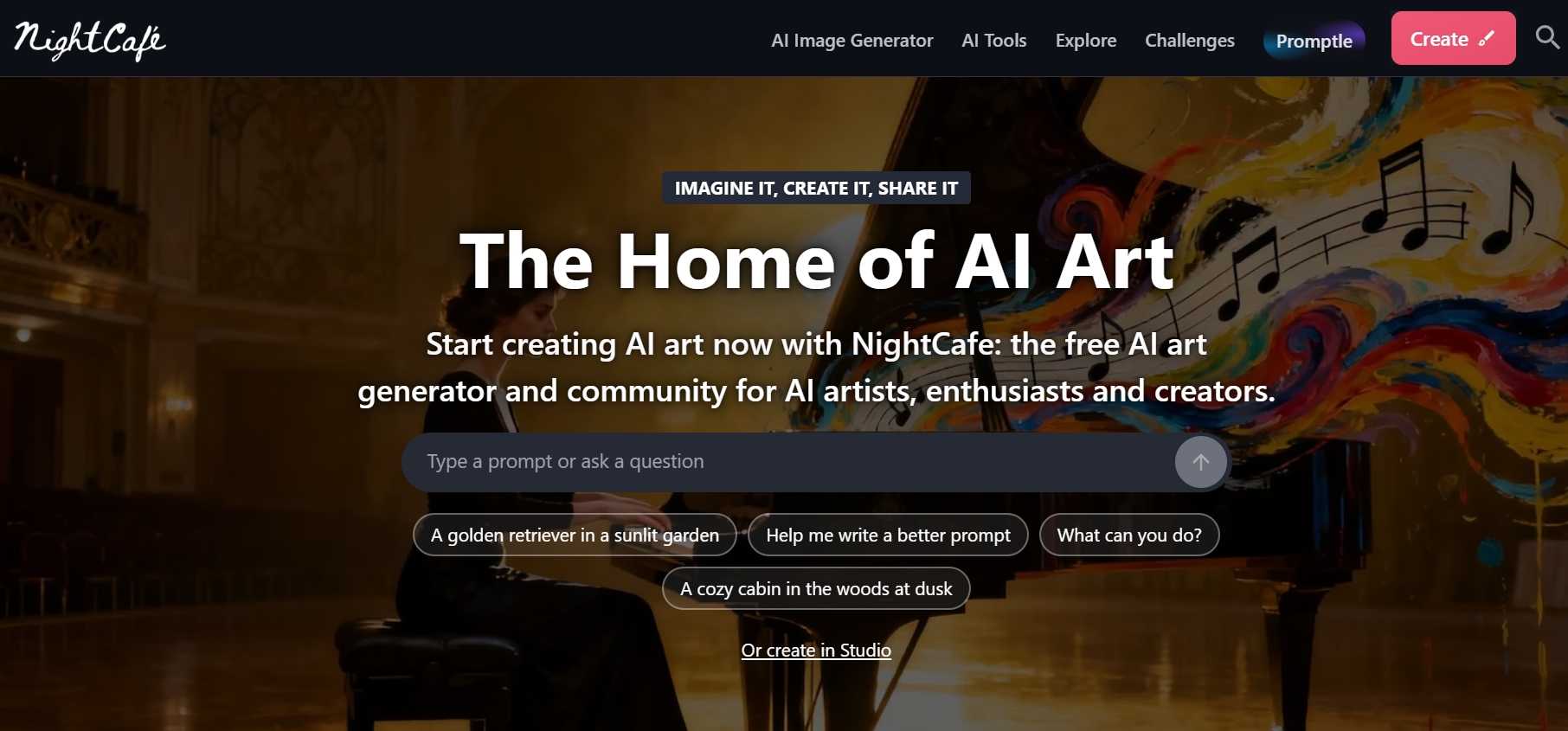
NightCafe is the alternative I would use when the goal is still exploration. It is a community art platform with multiple image models, daily credits, and a public gallery that makes other people’s settings easy to study. For moodboards, stylized stills, and casual experiments, that is enough.
Unlike ImagineArt, NightCafe feels like a community studio first. Unlike Senzia, it is not an uncensored video to video generator. You can create striking images and try newer video features, but a full uncensored AI video to video job — source clip in, controlled clip out — is not the center of the product. I would not rely on it for an uncensored reference to video brief where pose and identity have to survive the render.
Daily credits make it easy to test ideas without a subscription on day one. The tradeoff is the same one community platforms usually have: filters, queues, and model access vary, and a restyle AI video uncensored pass on a real client clip is outside what I would trust it to finish.
Pros
-
Multiple image models: Offers access to various image generation models, along with a community gallery that helps users discover effective prompts and visual styles.
-
Daily free credits: Provides daily credits for low-cost experimentation and casual creative projects.
-
Beginner-friendly experience: An approachable platform for hobbyists creating still images, exploring concepts, and experimenting with different artistic styles.
Cons
-
Limited reference-video workflows: Not designed as a professional uncensored reference video to video production pipeline.
-
Video is a secondary feature: Users who need polished, finished video content will generally have to move to another platform for further production.
-
Community browsing can be distracting: Exploring community creations and prompts can take time away from the actual creative brief, especially when the project requirements are already clear.
Best For
Hobbyists, students, and early concept work, when you want to try models and collect looks before you commit to a video-to-video production tool.
Website: uncensored video generator with NightCafe
How I Evaluated These Imagine.art Alternatives
I did not score these tools on a generic feature list. I compared them the way someone shopping for an ImagineArt alternative actually works. The question was whether the tool shortens the path from an idea, or from a clip you already have, to a usable video.
When comparing AI image and video generation platforms, I focus on six key factors:
-
Story and source handling: Can the platform work with a prompt, script, image, or existing video? Does it support uncensored reference to video, allowing users to guide generation with a sample clip rather than creating motion from scratch?
-
Uncensored video capabilities: Can it function as a full uncensored video to video generator, or is it limited to static image generation?
-
Pricing and accessibility: Does it offer one-time credit packages or require a subscription? Is there a free trial before payment? Can users check the credit cost before starting a generation?
-
Scene quality and consistency: Do characters, products, and facial features remain consistent throughout an uncensored reference video to video workflow?
-
Post-generation control: Can users extend clips, swap faces, or apply a restyle AI video uncensored transformation without restarting the entire creative process?
-
Workflow completeness: Does the platform support audio, editing, and export, or does it only deliver raw video clips? A finished video to video AI uncensored result should be practical enough for further editing and publishing.
How I'd Choose The Right Imagine.art Alternative
If you want one platform from an idea or a source clip to a finished video, start with Senzia. It combines generation, image editing, video extension, motion control, face swap, and AI music. That covers ads, UGC-style videos, product showcases, and personal projects. It is also the option I would open for uncensored AI video to video.
If the asset is a logo, icon set, or brand system, use Recraft and do not force it into video. If you want many open models, LoRA, and a looser uncensored video to video AI sandbox, Mage Space is the flexible pick. If you are making social stills, portraits, or a quick promo graphic, Fotor AI is faster than a full generation lab.
If the job is a concept frame for a game, a pitch, or a world, Leonardo AI is the better ImagineArt alternative. If the frame must look like anime or a stylized character, SeaArt is the better room. If you already have footage and you mainly want it redrawn as anime or cartoon, GoEnhance AI is the specialist uncensored video to video generator rival, with the caveat that finishing tools are thin. If you are still browsing models and collecting looks, NightCafe is the low-pressure start, not the place to deliver an uncensored reference video to video file.
My Personal Take
When the work has to cover more than one format, Senzia is the first tool I open. Ideas, scripts, images, and existing clips can become something I can publish. Generation and editing sit together, which is what I want for realistic scenes, product video, cinematic tests, and social assets.
I would still use ImagineArt for a quick image experiment when I do not need motion. I would still use GoEnhance when the only request is an anime restyle. For anything I would bill, I still run one uncensored video to video AI check and one uncensored video to video generator check on the same source clip before I commit. The moment the same project needs an uncensored reference to video guide, a saved face, an extend, and a private export, Senzia is the one I keep. A restyle AI video uncensored request that also has to match a product or a person is the same decision.
Best Imagine.art Alternative for uncensored video generator: Senzia
If your creative needs involve multiple video projects, Senzia is one of the strongest alternatives to ImagineArt in this category. Senzia is much more than a simple Text-to-Video tool. It also supports Image-to-Video, uncensored Video-to-Video processing, face swapping, Motion Control, and image and video editing. You can turn ideas, scripts, static images, or existing video clips into structured video content, with many results requiring little to no additional editing. The platform also supports uncensored reference video-to-video workflows, allowing you to guide motion with reference footage rather than relying entirely on text descriptions.
Senzia uses one-time credit packages instead of mandatory subscriptions. By comparison, ImagineArt's credit consumption can be difficult to estimate accurately before generation, which is one of the most common user complaints when comparing the two platforms. Senzia's entry-level credit package costs $9.90 and supports approximately 20 generations with commonly used models. This pricing structure makes budgeting more predictable and helps avoid situations where users discover that actual credit consumption is much higher than expected only after their balance runs out.
The platform's model library, which includes Grok Image, Wan 3.0, Nano Banana 2, and Seedance 2.5, allows users to adapt their creative workflows to different projects. Combined with its Wan-based Video Extender and the option to continue generation from the last frame, Senzia allows you to turn short video-to-video clips into longer sequences without requiring an additional subscription. This flexibility is a key advantage over ImagineArt, particularly for creators, marketers, and small teams who don't want every project restricted to a single content format.
With its extensive feature set, Senzia serves as a versatile all-in-one creative tool for creators, marketers, sales professionals, and teams, especially those who want the freedom to explore multiple storytelling formats rather than limit every project to a single approach.
Final Verdict
ImagineArt is a sensible choice when you want a broad image studio and a fast experiment. It is a weaker choice when the deliverable is an uncensored video generator result, especially an uncensored AI video to video file with a subject that has to stay consistent.
Senzia is the all-around alternative I would use. Recraft, Fotor AI, Leonardo AI, SeaArt, and NightCafe remain useful for design, quick stills, concept art, anime characters, and community experiments. Mage Space is the flexible multi-model option. GoEnhance AI is the stylized video-to-video specialist. Test them on a real clip, then count how much extra editing you still have to do. If that extra editing includes another uncensored video to video generator hop, you are already looking at the wrong primary tool.